New-client inquiries
Collect what the client is looking for and the questions the team needs to answer before choosing a service.
Bring booking requests, previous visit context, and the team’s next step together—so a familiar client does not have to start from the beginning.
Discuss your salon workflow Explore a returning-client request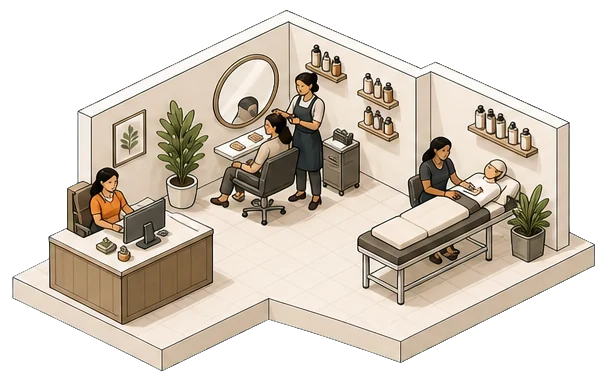
Built around the care your team puts in.
A little context goes a long way
Include the fictional client’s earlier visit notes. See how they help the team understand the request while leaving today’s preferences open for confirmation.
A familiar request
Returning client · Example profile
“Could I book the same cut as last time? Mornings usually work best for me.”
Bring the known example notes into the brief to see what changes.
A starting point for the next conversationOnly fictional notes are used in this example.
For the salon team
Confirm the requested service with Casey or review the earlier visit notes.
Availability has not been checked. No visit is booked.
Around the appointments you manage
Start with one recurring process. Shape the questions and review around your services, team, and booking tools.
Collect what the client is looking for and the questions the team needs to answer before choosing a service.
Bring available visit notes and new preferences into the request before confirming the next visit.
Keep the client’s question attached to the right appointment context and the person who should respond.
Check the client’s current wishes. A previous style or preferred time may have changed.
Leave service choice, suitability, and duration for the team to confirm when the request needs discussion.
Match the service with the team’s availability before a requested visit becomes a confirmed booking.
A practical place to begin
We’ll review the information it needs, the tools involved, and when a person takes over. Then test the first workflow with your team.
See how setup worksBefore you start
Yes. A repeatable request with a clear service and team handoff is a useful starting point. We agree which client information is available, who may use it, and what the team confirms.
No. It shows how previous visit notes can help prepare a request. The team still needs to confirm the current service, duration, stylist availability, and appointment time.
Keep the new request visible and confirm it with the client. Earlier notes provide context; they should not overwrite today’s preferences or substitute for a consultation.
We review your existing tools and confirm the proposed connections, permissions, and fallback. Reading visit context and creating or changing bookings are separate actions to scope and test.
Bring a real client-request process. We’ll map a useful first scope together.
Map your first workflow