

Service request
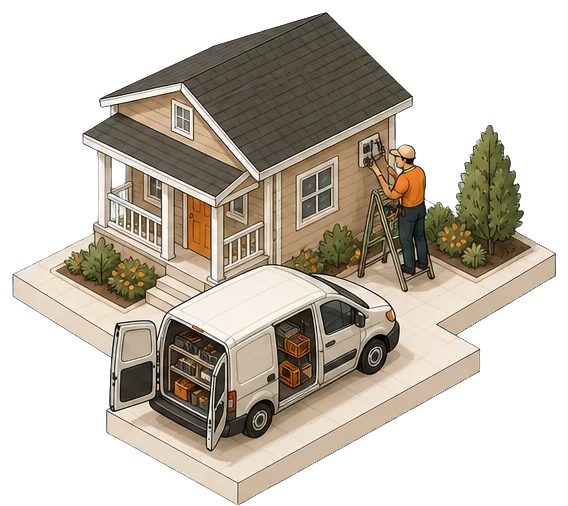
Inbound call · heating issue
Customer conversations, schedules, inventory context, records, and team decisions—connected around the way your business actually works.
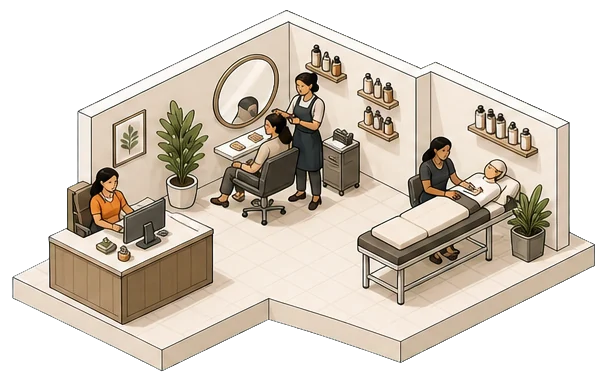
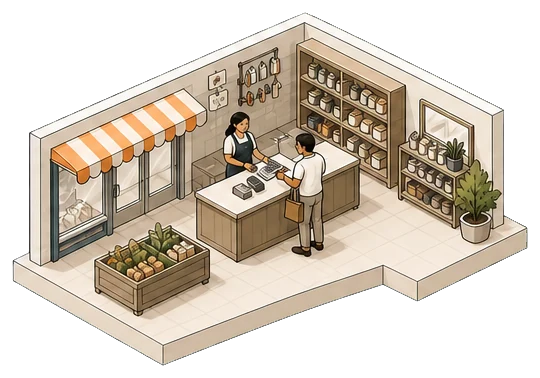
For Insurance & professional, new client call enters the LBOS operating layer. The work and its context remain connected until ready for agency review. The responsible person keeps the decision.
Built around the business
LBOS connects customer conversations, shared context, timing, daily work, and team decisions—then shapes that operating path around the business.
Home services: Request received
Inbound call · heating issue
Shared operating context
Need and timing stay attached
A person owns the commitment
Assign techGet accessCall customer
How it works
LBOS sits between the ways work arrives and the people and systems that move it forward.
Calls, messages, email, and forms feed one request.
 02 · Context assembled
Available context reaches the person who keeps the material decision.
Owner control
The same prepared request can be allowed, held, stopped, or sent to a person.
Prepared request“Can this move forward?”NeedContextOwner rule
Material work pauses at the responsible person before anything moves forward.
Pause and request a decisionRoute, icon, consequence, and wording change together—never color alone.
Review AI controlsYour existing stack
Candidate connections are mapped to the workflow, then their direction, permissions, failure behavior, and fallback are reviewed before launch.
Examples of candidate connection surfaces include Gmail, Twilio, Salesforce, HubSpot, Meta, Zoho, Google Calendar, Stripe, Square, Shopify, and QuickBooks.
Questions before the build
Start with the workflow, the real operating constraints, and the person responsible for each material decision.
Not by default. We begin with the way the business works today, then map what should stay, what should connect, and where LBOS can keep the work readable.
Candidate connections can include the communication, CRM, scheduling, commerce, and industry systems a business already uses. The direction, permissions, failure behavior, and fallback are reviewed for the specific workflow.
AI can gather approved context, organize a request, prepare work for review, and surface the next step inside the boundaries the team defines.
The work pauses for review or moves to a person with the available context. Uncertainty is not permission to improvise.
Yes. Human handoff is part of the operating model, and the context already gathered travels with the request.
Bring one customer journey and the tools around it. We review the current path, owner boundary, candidate connections, and the evidence needed to continue, change, or stop.
Start with one real workflow
Review the current path, owner boundary, connections to verify, and evidence needed before expanding.
Request a build call